

Okay, But Where Do I Even Begin?
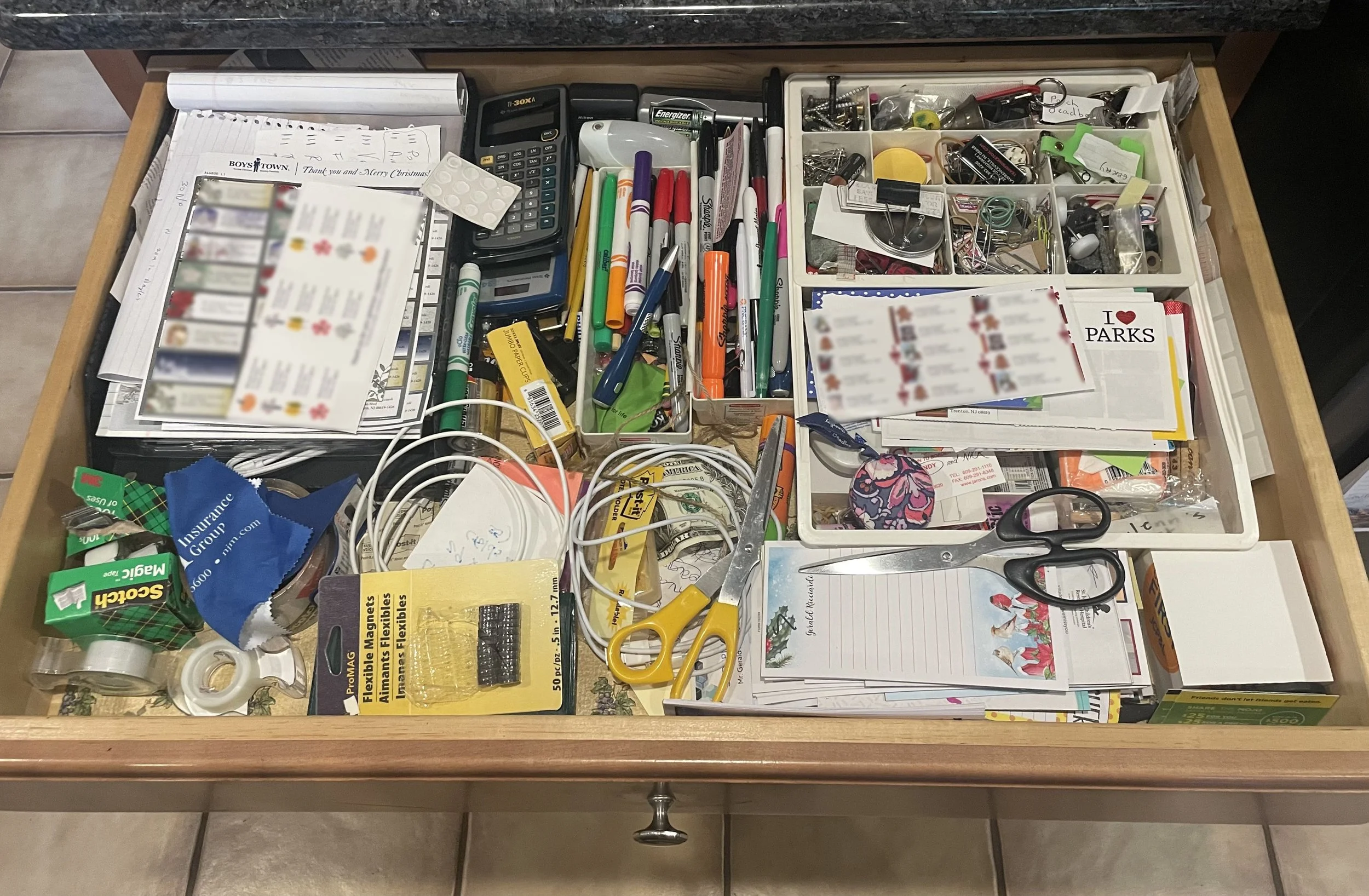
Knowing a space needs attention is one thing. Deciding you're ready to do something about it is another.
And that's usually when the question shows up:
"Okay, but where do I even begin?"
Don't Start With the Room
One of the biggest mistakes people make is deciding to organize an entire room.
The kitchen.
The bedroom.
The garage.
The basement.
The problem is that these aren't really starting points. They're entire projects.
A single room often contains dozens of different categories, decisions, and tasks. Looking at all of that at once can make it difficult to know where to begin, which is why many organizing projects never get started in the first place.
What Makes a Good Starting Point?
Instead of focusing on the room, focus on choosing a starting point that feels manageable.
A good starting point is:
Small enough to finish
Clearly defined
Easy to stay focused on
Contained to one area
For example:
One drawer
One shelf
One cabinet
One surface
These spaces work well because they have clear boundaries. You know exactly where the project starts, and just as importantly, you know when you're finished.
That sense of completion helps build confidence and momentum for the next area.
Look for the Easy Wins First
Not every decision requires a lot of thought.
Some things are obvious:
- Trash can go.
- Broken items can go.
- Expired products can go.
- Items that belong in another room can be put back where they belong.
Starting with these easier decisions creates progress quickly and helps build momentum before you get to the harder choices.
Don't Worry About Organizing Yet
This part surprises a lot of people.
When most people think about getting organized, they immediately picture bins, labels, containers, and storage systems.
But organizing isn't usually the first step.
If a space is full of things you don't use, don't need, or don't have room for, organizing those items won't solve the problem. It simply rearranges them.
That's why the first step is often reducing what's there.
Focus on removing anything that's clearly trash, broken, expired, no longer needed, or doesn't belong in that space. Once the volume is reduced, creating organized systems becomes much easier.
Redefine What Success Looks Like
Many people expect to see dramatic results right away.
But if you start with one drawer, one shelf, or one cabinet, the goal isn't to transform the entire room in a single day.
The goal is to finish what you started.
When you complete one small area, you create visible progress. That progress makes it easier to keep going, and over time, those small wins begin to add up.
What Matters Most
The best place to begin isn't necessarily the most important area in your home.
It's the area that's small enough, simple enough, and manageable enough that you'll actually start.
Because most of the time, the hardest part isn't the organizing itself.
It's getting started.