

Why Getting Organized Feels So Overwhelming
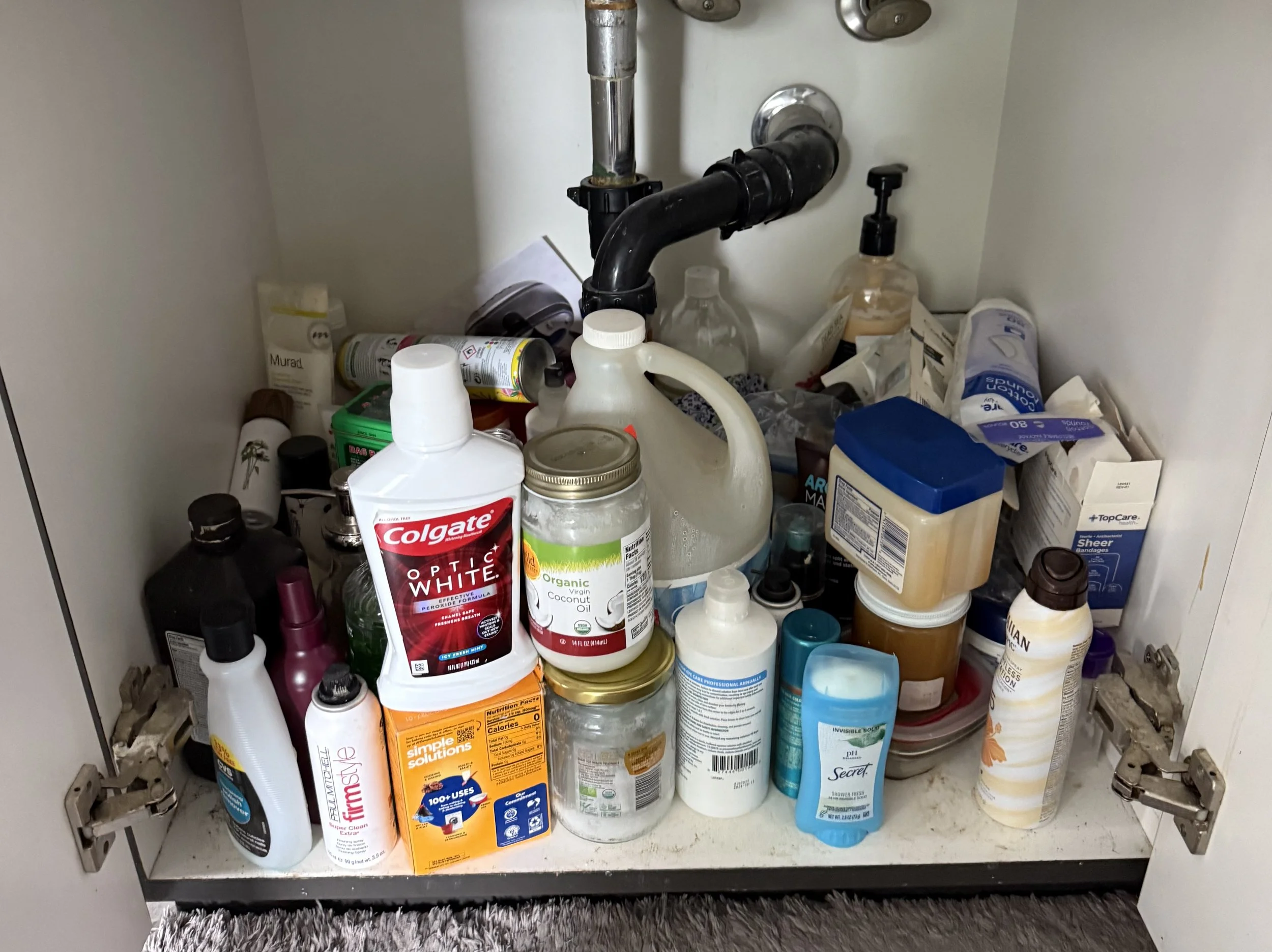
If you’ve ever looked at a space in your home and felt immediate dread, you’re not alone.
It might be the piles you keep avoiding, the garage you can’t park in, or the stress that hits the second you walk into a room. At some point, it starts to feel like you've failed. Even worse, you want to do something about it, but you don't know where to begin.
So, why does it feel so overwhelming?
1. You're trying to make hundreds of decisions
A cluttered space isn't just a collection of items. It's a collection of decisions waiting to be made.
Every object raises questions. Do you still use it? Do you need it? Should it stay? Should it go? If it stays, where should it live?
One item isn't difficult.
A room full of them is.
By the time you've made dozens of decisions, your mental energy starts to wear down. What seemed like a simple organizing project suddenly feels much larger than expected.
2. The problem is bigger than it looks
When people imagine organizing a space, they often picture the physical work involved.
They think about moving things, putting things away, and making the room look better.
What they don't always anticipate is everything happening behind the scenes.
You're sorting through years of postponed decisions. You're evaluating habits, routines, and priorities. You're figuring out how the space needs to function and what is getting in the way.
The visible clutter is only part of the project.
3. Everything feels connected
One of the most frustrating parts of organizing is that very few items exist in isolation.
You pick up a stack of papers and realize some belong in another room. You start clearing a closet and find things that belong in the garage. You open a storage bin and uncover items connected to three other unfinished projects.
Instead of making progress in one area, it can feel like every decision creates three more.
The result is a project that never seems to get smaller, even when you're actively working on it.
4. There's no obvious finish line
Most projects have a clear endpoint.
You finish painting a room. You finish mowing the lawn. You finish assembling a piece of furniture.
Organizing is different.
How much is enough? How much should stay? How much should go? Is the room finished when it looks better, when everything has a home, or when it stays organized for a month?
Without a clear finish line, it's easy to feel like you're constantly falling behind, even when you've made meaningful progress.
The Reality
When people struggle with clutter, they often assume the problem is a lack of motivation, discipline, or effort.
More often, the challenge is that they're trying to work through a process that's far more complicated than it appears from the outside.
What looks like a simple task is usually a combination of decisions, priorities, habits, time, and physical belongings all competing for attention at once.
And when all of those things show up together, it's easy to see why getting organized can feel so overwhelming.